
Have you ever plugged in your external hard drive only to find that your laptop is not showing it? This frustrating problem can stem from various issues, including faulty connections, driver problems, or file system errors. As an expert in troubleshooting computer hardware, I understand how vital external storage is for your data management needs. In this article, we will explore the common reasons why your laptop may not detect your external hard drive and provide step-by-step solutions to help you resolve these issues effectively. By the end, you’ll have the knowledge and tools to get your external drive recognized and functioning smoothly again.
Understanding External Hard Drives
External hard drives are crucial for additional storage and data backup. When a laptop fails to recognize an external hard drive, it can be frustrating. Understanding the basic functions of these devices can help identify potential issues. External hard drives connect to laptops via USB ports and require proper power supply and drivers to function. They serve various purposes, from data transfer to storage expansion, making them essential tools in modern computing. Ensuring that your external hard drive is compatible with your operating system is also vital, as compatibility issues can prevent detection.
How External Hard Drives Work
External hard drives operate by connecting through USB or other interfaces, allowing data transfer between the drive and the laptop. They are powered by the laptop’s USB port or may have a separate power source. Understanding this mechanism is essential, as any disruption in power supply can lead to detection issues.
Common Uses for External Hard Drives
Users employ external hard drives for various reasons, including backup storage, file transfer between devices, and expanding storage capacity. Knowing the purpose of your external hard drive can help diagnose why it may not be detected, as specific drives may have unique connectivity requirements.
Key Points:
- External hard drives connect via USB for data transfer
- Power supply and compatibility are crucial for detection
Troubleshooting Detection Issues
When your laptop does not show an external hard drive, several troubleshooting steps can help resolve the issue. First, check physical connections, ensuring the USB cable is securely plugged into both the laptop and the drive. Next, verify whether the drive is powered on, as many external drives require an external power source. Additionally, inspect the drive on another computer to rule out hardware failure. If the drive is still undetected, consider checking the Disk Management utility on your laptop to see if the drive is recognized but not assigned a letter.
Physical Connection Checks
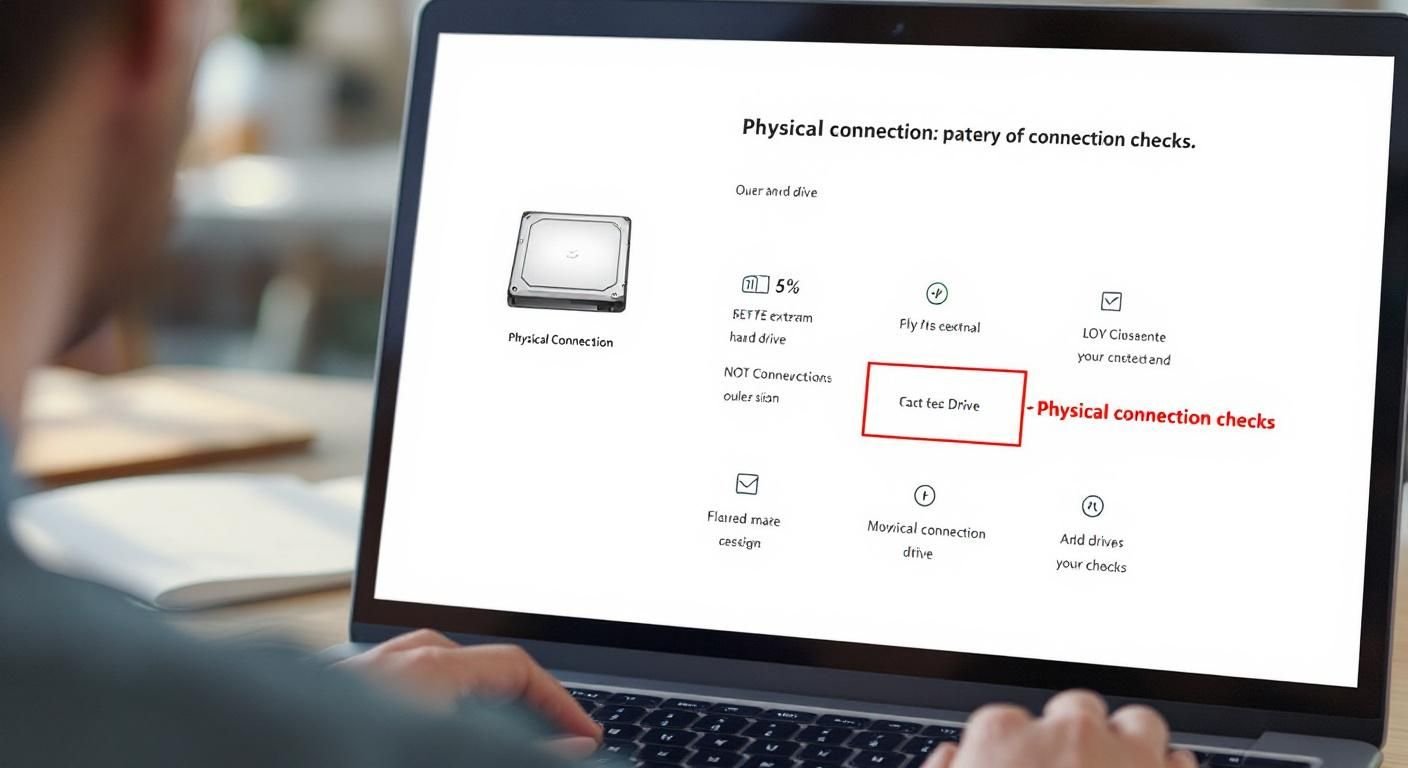
Ensure that the USB cable is firmly connected to both the external hard drive and the laptop. Sometimes, cables can be loose or damaged, leading to connectivity issues. Try using a different USB port or cable to see if the problem persists.
Using Disk Management
If the external hard drive is not showing up, open Disk Management to check if the drive is recognized without a drive letter. If it appears there, you may need to assign a letter or format the drive. This can often resolve detection issues without further complications.
Key Points:
- Check physical connections and power supply
- Use Disk Management to troubleshoot recognition issues
Understanding Connection Issues
When your laptop fails to recognize an external hard drive, the first step is to troubleshoot connection issues. Check the physical connection by ensuring that the USB cable is securely plugged in and that the port is functioning correctly. Try using a different USB port or cable to rule out hardware failure. Additionally, inspect the external hard drive for any signs of damage, as this could prevent proper communication with your laptop.
Check USB Ports and Cables
Begin by testing the USB ports on your laptop. Connect another USB device to see if it is recognized. If not, the port may be faulty. Next, try a different USB cable with your external hard drive. A damaged or incompatible cable can hinder proper data transfer.
Power Supply Issues
Some external hard drives require external power to function. If your device has a separate power adapter, ensure it is plugged in and functioning. Check for indicator lights on the drive; if they aren’t lit, it may not be receiving power, indicating a need for troubleshooting the power supply.
Key Points:
- Physical connection is crucial for device recognition.
- Inspect both USB ports and cables for damage.
💡 Always use USB ports directly on your laptop rather than through a hub for better connectivity.
💡 Keep your USB cables in good condition; replace frayed or damaged ones immediately.
Software and Driver Considerations
If the physical connection is intact, the next area to investigate is software-related issues. Outdated or corrupted drivers can prevent your laptop from recognizing an external hard drive. Use the Device Manager to check for any updates or errors related to disk drives. Additionally, ensure that the external drive is formatted in a compatible file system for your operating system. If the drive is formatted for a different OS, it may not be recognized.
Updating Drivers
Access Device Manager on your laptop and look for ‘Disk drives.’ Right-click on the external hard drive and select ‘Update driver.’ This will search for any available updates. A successful update can resolve recognition issues caused by software incompatibilities.
Disk Management Inspection
Open Disk Management to see if your external hard drive appears there without a drive letter. If it does, assign a letter to the drive by right-clicking on it and selecting ‘Change Drive Letter and Paths.’ This action can resolve issues where the drive is detected but not accessible.
Key Points:
- Driver issues can prevent external hard drives from being recognized.
- Disk Management can help manage drive visibility and accessibility.
💡 Regularly check for driver updates to ensure better compatibility with external devices.
💡 Use Disk Management to troubleshoot and assign drive letters easily.
EXPERT TIPS Pro Advice
Perform a safe eject before disconnecting your drive.
This prevents data corruption and ensures the drive is properly recognized when reconnected.
Check for OS updates regularly.
Operating system updates can improve hardware compatibility and fix bugs that may cause recognition issues.
Run a hardware diagnostic.
Many laptops come with built-in diagnostic tools that can help identify hardware issues impacting external drive recognition.
Format the drive in a compatible file system.
If moving between different operating systems, ensure the drive is formatted in a universally recognized file system like FAT32 or exFAT.
Frequently Asked Questions
Conclusion
If your laptop isn’t showing your external hard drive, it could be due to connection issues, unallocated space, or driver problems. Troubleshooting steps such as checking cables, using Disk Management, and ensuring system compatibility are essential for resolving these issues effectively.
🎯 Key Takeaways:
- Check connections and cables for issues.
- Use Disk Management to format or assign drive letters.
- Test the hard drive on different computers.
- Keep drivers updated for compatibility.
- Backup data before formatting.
Expert Advice: Stay proactive by regularly checking your external hard drive’s health and ensuring timely backups to avoid data loss. Familiarize yourself with troubleshooting steps to quickly resolve similar issues in the future.
If your external hard drive still isn’t recognized, consider researching more advanced troubleshooting methods or consulting tech support.



Leave a Reply