
Are you confused about the difference between app control and remote control lighting? With the rise of smart home technology, understanding these two lighting control methods is crucial for modern homeowners. App control offers convenience and customization, while traditional remote control provides simplicity and ease of use. In this article, we will explore the fundamental differences, advantages, and drawbacks of each approach to help you make an informed decision on which lighting control method best suits your needs. By the end, you’ll have a clear understanding of how these technologies can enhance your living space and improve your overall lighting experience.
Understanding App Control Lighting
App control lighting utilizes smartphone applications to manage lighting fixtures remotely. This technology connects smart bulbs or fixtures to a Wi-Fi network, allowing users to control their lights from anywhere with an internet connection. Users can set schedules, adjust brightness, and even change colors through the app. The integration of voice command features often allows for hands-free operation, enhancing user convenience. This method provides flexibility and a high level of customization, making it ideal for modern smart homes.
Features of App Control Lighting
App control lighting offers various features such as remote access, scheduling, and automation. Users can create personalized lighting scenes for different occasions, adjust settings in real-time, and even integrate their lighting system with other smart home devices. This interconnectedness enhances overall home automation, making it a compelling choice for tech-savvy individuals.
Benefits of App Control
One significant benefit of app control lighting is the ability to manage lights from anywhere. This means users can turn off lights left on during the day or adjust settings before arriving home. Additionally, many app-controlled systems come with energy-saving features that help reduce electricity costs, contributing to both convenience and sustainability.
Key Points:
- App control allows for remote access and customization
- Enhanced automation through integration with smart home devices
Exploring Remote Control Lighting
Remote control lighting involves using a physical remote device to operate lights without the need for a smartphone or app. This traditional approach typically utilizes infrared or radio frequency technology to communicate with lighting fixtures. Remote controls are often straightforward, featuring buttons for on/off, dimming, and color changes. While they may lack the advanced features of app-controlled systems, remote control lighting remains a user-friendly option for those who prefer simplicity.
Features of Remote Control Lighting
Remote control lighting systems usually offer basic functions such as power on/off and dimming. Some advanced models allow users to switch between different lighting modes or colors, but the range of features is generally more limited compared to app control systems. These systems are often plug-and-play, requiring minimal setup, which can be advantageous for users not inclined towards technology.
Benefits of Remote Control
One of the primary benefits of remote control lighting is ease of use. Users can quickly manage their lights without navigating through apps or connecting to Wi-Fi. This can be particularly beneficial for elderly individuals or those who may not be tech-savvy. Additionally, remote control lighting systems can operate independently of internet connectivity, ensuring consistent functionality.
Key Points:
- Remote control provides a straightforward user experience
- No need for internet connectivity ensures reliability
Understanding App Control Lighting
App control lighting refers to systems that allow users to manage their lighting through a smartphone or tablet application. This technology typically connects through Wi-Fi or Bluetooth, offering advanced functionalities such as scheduling, dimming, and color changes. Users can control multiple lights simultaneously, creating customized lighting scenes or automating lighting based on time of day or personal preferences. Additionally, app control often integrates with other smart home devices, providing a comprehensive home automation experience.
Features of App Control Lighting
App-controlled lighting provides a variety of features that enhance user experience. Users can set schedules to turn lights on or off at specified times, create mood settings by adjusting brightness and colors, and even control lights remotely from anywhere with internet access. This flexibility supports energy savings and convenience, allowing users to optimize their home lighting without manual intervention.
Integration with Smart Home Systems
Another significant advantage of app control lighting is its ability to integrate with other smart home systems. Users can connect lighting with devices like smart speakers, security cameras, and thermostats, allowing for coordinated actions. For example, lights can automatically turn on when a security camera detects motion, enhancing home security while providing convenience.
Key Points:
- App control offers advanced features and integration with smart home systems.
- Remote access allows for greater convenience and energy management.
💡 Utilize automation features to save energy by scheduling lights to turn off when not needed.
💡 Explore color-changing options to set the mood for different activities, enhancing your living space’s ambiance.
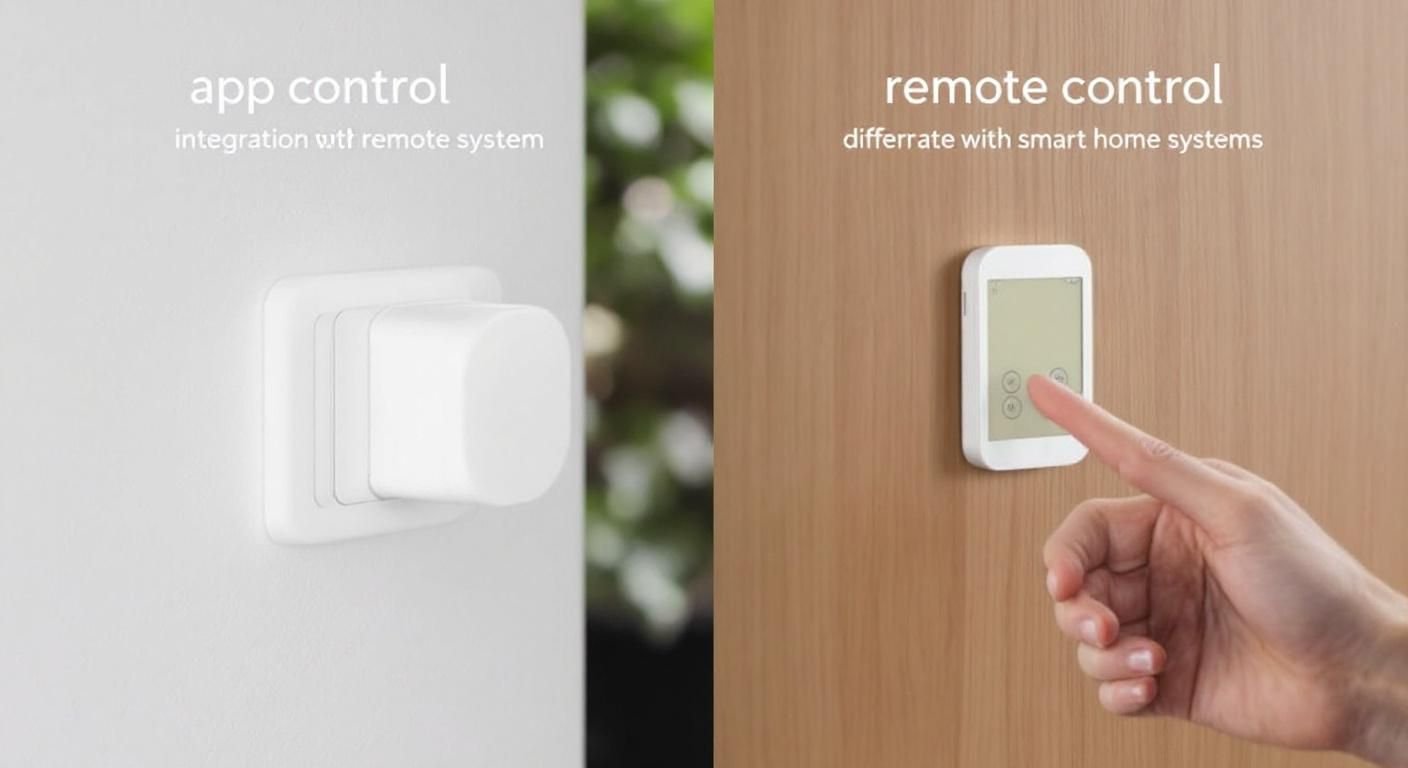
Exploring Remote Control Lighting
Remote control lighting systems utilize handheld remotes to manage lighting settings. These systems typically operate on infrared or radio frequencies, allowing users to control lights from a distance without the need for a smartphone. While remote control offers convenience and ease of use, it generally lacks the advanced functionalities of app control systems, such as remote access or customizable settings. However, these systems are often simpler to set up and can be more cost-effective for basic lighting needs.
Limitations of Remote Control Lighting
One of the main limitations of remote control lighting is the range of operation. Typically, users can only control lights within a specific distance of the remote, which can be restrictive in larger homes. Additionally, the lack of automation features means users must manually operate lights, making it less efficient compared to app-controlled systems.
Ease of Use and Setup
Remote control lighting systems are often praised for their straightforward setup. Users need to plug in the lights and pair them with the remote, making it accessible for individuals who may not be tech-savvy. This simplicity can be appealing for those looking for a quick and easy lighting solution without the need for smart devices or apps.
Key Points:
- Remote control systems are easier to set up but lack advanced features.
- Limited range and manual operation can be drawbacks for some users.
💡 Consider remote control lighting for simpler setups where advanced features are not necessary.
💡 Keep the remote in a designated location to prevent misplacement and ensure easy access.
EXPERT TIPS Pro Advice
Choose the right system for your needs.
Assess your lifestyle and how you plan to use your lighting. If you desire automation and smart integration, app control is ideal; for simplicity, remote control may suffice.
Consider future scalability.
If you plan to expand your smart home system, opt for app control lighting, as it can easily integrate with other smart devices.
Evaluate your technical comfort level.
If you’re not comfortable with technology, remote control systems are easier to manage, whereas app control may require more setup and familiarity.
Frequently Asked Questions
Conclusion
Understanding the difference between app control and remote control lighting helps users make informed decisions based on their needs. App control lighting offers advanced features and remote access, while remote control lighting provides straightforward operation. Evaluate your preferences to choose the best option.
🎯 Key Takeaways:
- App control lighting enables remote access and automation.
- Remote control lighting functions independently without Wi-Fi.
- App control offers more features than remote control lighting.
- Choose based on your need for simplicity or advanced functionality.
Expert Advice: Consider your lifestyle and how you plan to use your lighting system. Evaluate both options to decide which best fits your preferences and requirements.
Explore your lighting options further and determine which control method will enhance your living space.



Leave a Reply