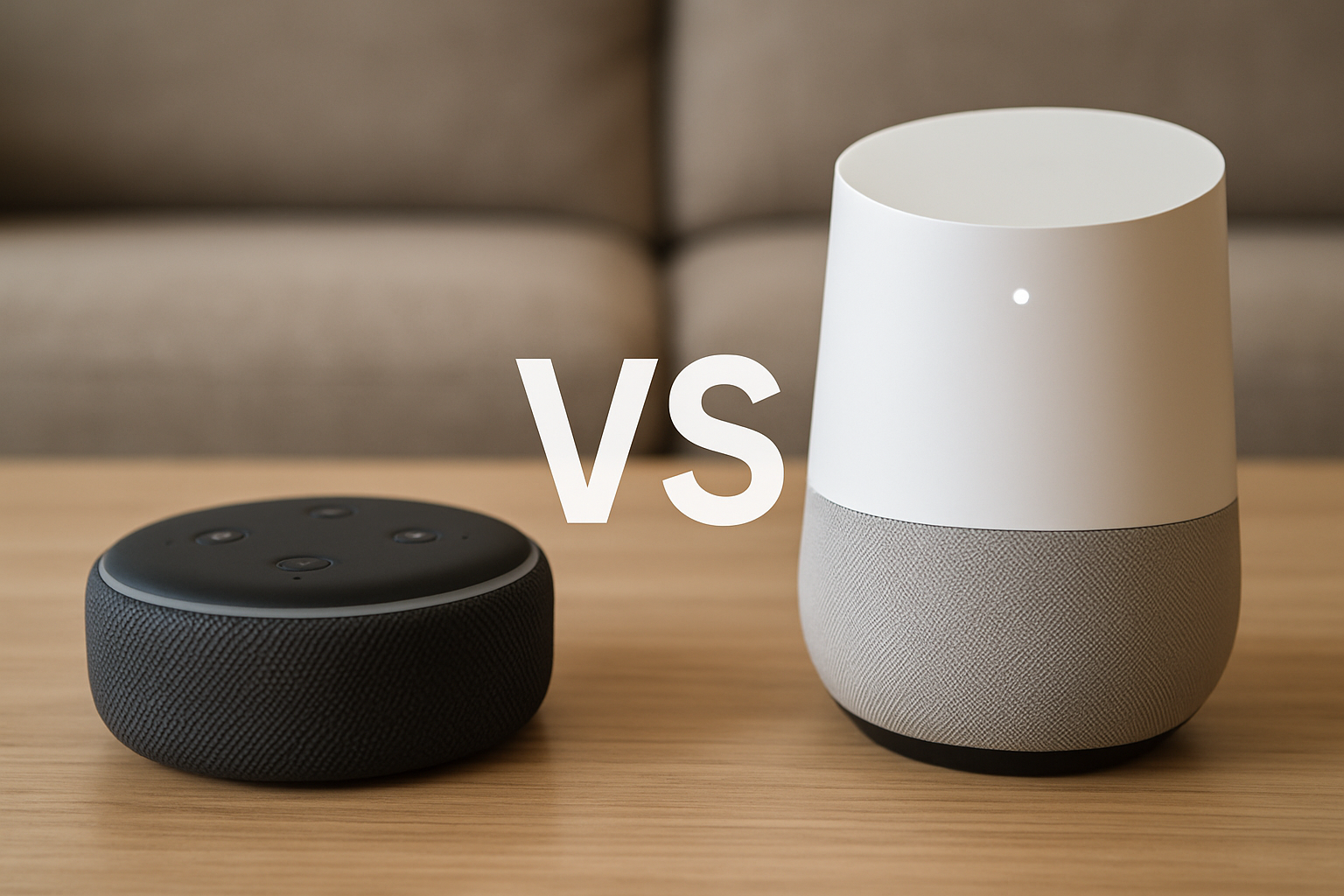
In today’s tech-savvy world, the debate of Alexa vs Google Home: Which Is Better? has become a pressing question for many households. With millions of users relying on smart home assistants for convenience, entertainment, and control, making the right choice can feel overwhelming. Both platforms offer unique features and capabilities, but understanding their differences is crucial for maximizing your smart home experience. In this article, we will explore the key aspects of both devices, including their functionality, user experience, and integration with smart home ecosystems. By the end, you’ll have a clearer understanding of which assistant might best suit your lifestyle and preferences.
Understanding Smart Home Assistants
Smart home assistants have revolutionized the way we interact with technology in our homes. These devices utilize voice recognition and artificial intelligence to perform tasks, answer questions, and control smart devices. Two of the most popular options in this market are Alexa and Google Home. Both systems serve similar functions but have distinct features that cater to different user preferences. Understanding these differences can help consumers make informed decisions about which device aligns best with their lifestyle and needs.
Voice Recognition Technology
Voice recognition is a core component of smart assistants, enabling users to communicate naturally. Alexa and Google Home utilize advanced algorithms to understand and process commands. However, Google Home often excels in natural language processing, making it more adept at understanding complex queries. In contrast, Alexa may perform better with direct commands, showcasing its design for specific tasks.
Ecosystem Integration
The effectiveness of a smart home assistant often hinges on its ability to integrate with other smart devices. Alexa boasts a wider range of compatible devices across various brands, making it a versatile choice for users with diverse technology. Conversely, Google Home integrates seamlessly with Google services and products, which can enhance user experience for those already embedded in the Google ecosystem.
Key Points:
- Smart assistants use voice recognition to function.
- Integration with other devices influences user experience.
User Experience and Customization
The user experience is crucial when comparing smart home assistants. Both Alexa and Google Home offer intuitive interfaces, but their customization options can significantly impact user satisfaction. Users can tailor their experiences through various settings, skills, and routines, allowing for a more personalized interaction. Evaluating these features can help individuals decide which device aligns better with their preferences and daily routines.
Customization and Skills
Alexa provides a rich library of skills that users can enable to enhance functionality, ranging from games to productivity tools. This extensive customization allows users to tailor their Alexa experience significantly. Google Home also offers customization, but it focuses more on integration with Google services, streamlining tasks such as calendar management and reminders.
User Interface and Interaction
The user interface for both Alexa and Google Home is designed for ease of use. Alexa often features a more straightforward command structure, while Google Home is optimized for conversational interactions. This distinction may appeal to different users; those who prefer direct commands might lean towards Alexa, while users looking for a more interactive experience may favor Google Home.
Key Points:
- User experience is key to device preference.
- Customization options enhance user satisfaction.
Comparative Features of Alexa and Google Home
When evaluating Alexa vs Google Home, it’s vital to compare their core features. Both voice assistants can control smart home devices, play music, provide weather updates, and answer questions. However, Alexa tends to excel in device compatibility due to its extensive integration with a variety of smart home products. Google Home, on the other hand, shines with its superior search capabilities, leveraging Google’s database for more accurate and detailed responses. This difference can significantly influence user experience, depending on individual needs and tech ecosystems.
Smart Home Compatibility
Alexa typically supports a wider range of smart home devices, making it a preferred choice for users with various connected gadgets. Its open platform allows third-party developers to create skills that enhance functionality. Conversely, Google Home, while having fewer integrations, works seamlessly with Google-centric devices, ideal for users heavily invested in the Google ecosystem.
Search and Information Retrieval
Google Home’s strength lies in its information retrieval capabilities. Utilizing Google’s search engine, it provides more comprehensive and contextually relevant responses. Alexa’s responses can sometimes be limited to its skill set, which might not cover as broad a range of queries as Google Home does, making it crucial for users who prioritize information accuracy.
Key Points:
- Alexa has wider smart home compatibility.
- Google Home excels in search capabilities.
💡 Consider your current smart home setup when choosing a voice assistant, as compatibility can significantly affect usability.
💡 Assess your primary needs, whether they are smart home control or information retrieval, to determine which assistant suits you better.
User Experience and Interaction
The user experience plays a crucial role in the debate of Alexa vs Google Home. Both systems offer unique interaction styles that may appeal to different users. Alexa employs a more skill-based approach, allowing users to enable specific functionalities, which can be both a strength and a limitation. In contrast, Google Home emphasizes conversational interaction, making it easier for users to engage without needing to memorize commands, thus creating a more intuitive experience.
Voice Recognition and Accuracy
Voice recognition for both assistants is generally reliable, but Google Home has a slight edge in understanding context and nuances in speech. This leads to fewer misunderstandings during interactions. Users who often use varied phrases or complex commands may find Google Home’s natural language processing more accommodating.
Routine and Automation Customization
Both assistants allow users to set routines and automate tasks, but the implementation differs. Alexa’s routine setup can be more complex, offering a broader range of customizable options. Google Home simplifies this process with a more user-friendly interface, making it easier for those who may not be tech-savvy to create effective routines.
Key Points:
- Google Home has better conversational interaction.
- Alexa offers more customization for routines.
💡 Experiment with both systems to identify which interaction style feels more intuitive for you.
💡 Take advantage of routine settings in either system to automate daily tasks, enhancing efficiency in your daily life.
EXPERT TIPS Pro Advice
Evaluate your specific use cases before deciding.
Understanding what you primarily need from a voice assistant—be it smart home control or information retrieval—can guide your choice effectively.
Test the voice recognition capabilities of each system.
Trying both assistants in real-life scenarios can help you gauge how well they understand your speech patterns and commands.
Consider ecosystem compatibility when choosing a voice assistant.
If you already own devices from a particular ecosystem, selecting an assistant that integrates well can enhance your user experience.
Stay updated on new features and updates for both platforms.
Both Alexa and Google Home frequently receive updates, which can impact their functionality and compatibility; keeping informed can help you make the most of your choice.
Frequently Asked Questions
Conclusion
When comparing Alexa and Google Home, consider their unique strengths and weaknesses, such as voice recognition, smart home compatibility, and privacy features. Your choice should align with your specific needs and existing ecosystem. Evaluating these factors will help you make an informed decision.
🎯 Key Takeaways:
- Alexa excels in smart home integration, while Google Home is better for information retrieval.
- Ecosystem compatibility is crucial for optimal smart home functionality.
- Voice recognition significantly impacts user experience.
- Privacy features vary; review them based on your preferences.
Expert Advice: Take the time to assess your personal preferences and existing technology before making a choice. Understanding the strengths of each system can lead to a more satisfying smart home experience.
Explore your options further by researching features and user experiences to find the best fit for your needs.